

Getting injured because someone else wasn’t careful can turn your whole life upside down. Between hospital visits, mounting bills, and the stress of not knowing what comes next, the last thing you need is to worry about whether you’ve hired the right attorney.
Yet this single decision can mean the difference between walking away with fair compensation and settling for pennies on the dollar. The truth is, not all personal injury lawyers are created equal.
Some genuinely care about their clients and fight tooth and nail for every penny deserved. Others treat cases like numbers on a spreadsheet, rushing through settlements just to collect their fees.
| Factor | What to Look For | Why It Matters |
|---|---|---|
| Experience | 5+ years in personal injury law specifically | Specialized knowledge of tactics and laws |
| Track Record | Proven settlements and verdicts in similar cases | Demonstrates ability to win cases like yours |
| Communication | Returns calls within 24-48 hours | Keeps you informed and reduces stress |
| Fee Structure | Contingency basis (33-40% typical) | No upfront costs; lawyer invested in winning |
| Resources | Access to medical experts and investigators | Builds stronger cases with better evidence |
| Trial Experience | Willingness to go to court | Insurance companies offer more when facing trial risk |
| Client Reviews | Consistent positive feedback online | Real experiences from people in your shoes |
| Local Knowledge | Familiarity with local courts and judges | Understands regional legal landscape |
What a Personal Injury Lawyer
Before diving into how to choose one, it helps to understand what a personal injury lawyer does in the first place. When you hire one, you’re not just getting someone to file paperwork.
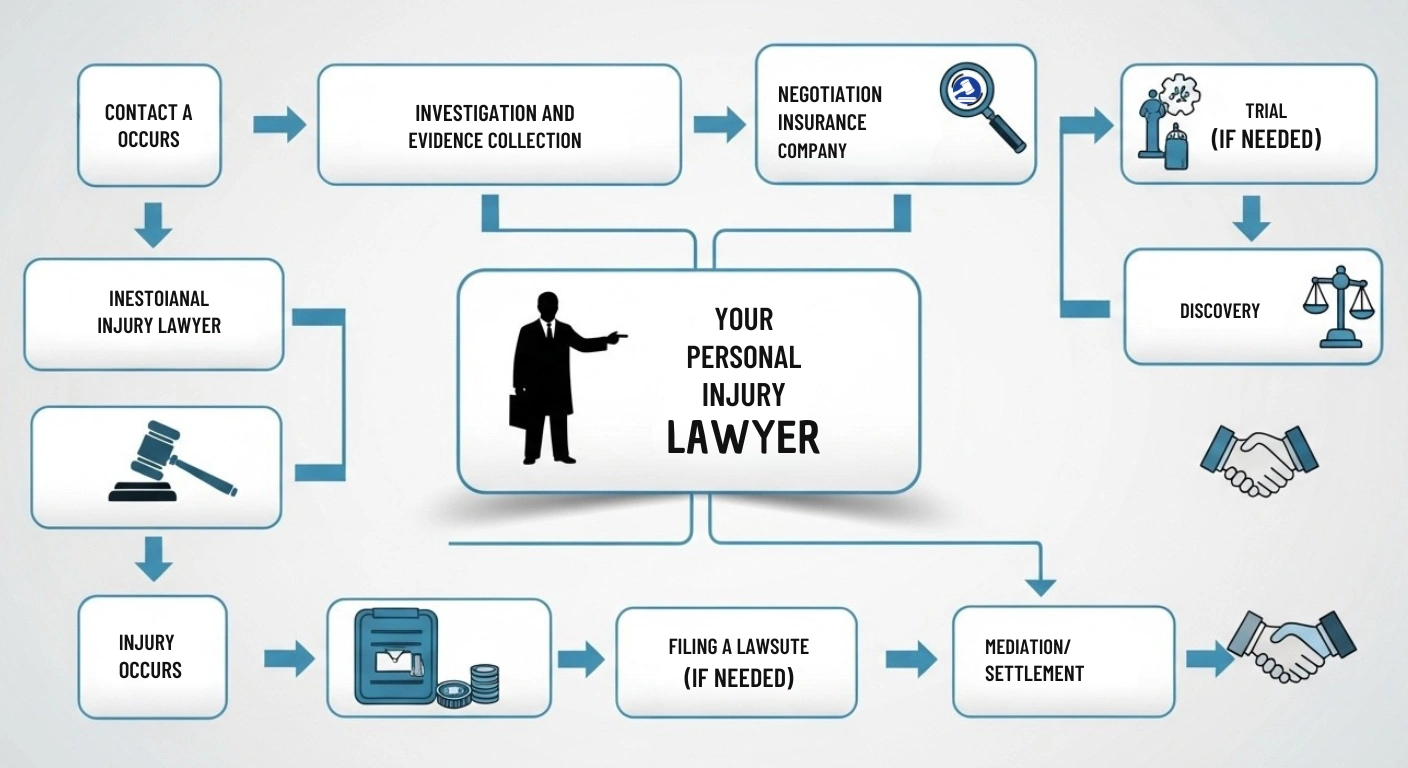
You’re getting an advocate who handles the entire claims process while you focus on healing. A good personal injury attorney takes over communication with insurance companies so you don’t have to deal with adjusters trying to lowball you.
A personal injury lawyer typically handles:
- Investigating the incident that caused your injuries
- Gathering evidence including police reports, medical records, and witness statements
- Hiring medical experts and accident reconstruction specialists
- Calculating the true value of your claim including future medical needs
- Negotiating with insurance adjusters and opposing attorneys
- Filing lawsuits and handling all court procedures if necessary
- Preparing and presenting your case at trial when needed
Personal injury law covers car accidents, slip and fall incidents, medical malpractice, defective products, and workplace injuries. Each type requires specific knowledge, which is why finding someone who specializes in cases similar to yours matters so much.
Why Specialization Should Be Your First Priority
The legal field is incredibly specialized. A lawyer who primarily handles divorces or business contracts might be perfectly competent in those areas but completely out of their depth with a personal injury claim.
Personal injury cases involve unique challenges that generalists simply don’t face regularly. Your attorney needs to understand how insurance companies evaluate claims and what medical evidence strengthens or weakens a case.
Specialized personal injury lawyers offer advantages including:
- Deep understanding of insurance company tactics and negotiation strategies
- Established relationships with medical experts and investigators
- Knowledge of state-specific statutes of limitations and procedural rules
- Familiarity with how local judges and juries respond to injury cases
- Experience calculating damages for long-term consequences
When you meet with potential lawyers, ask directly about their practice focus. Someone who dedicates most of their time to personal injury cases will have deeper knowledge than someone who dabbles occasionally.
The Importance of Relevant Experience in Your Type of Case
Not all personal injuries are alike, and neither are the legal strategies required to handle them. A car accident case differs significantly from a medical malpractice claim.
If you were hurt in a truck accident, look for someone who understands federal trucking regulations and driver log requirements. If you suspect medical malpractice, you need an attorney familiar with medical terminology and standard of care arguments.
Questions to ask about case-specific experience:
- How many cases similar to mine have you handled?
- What were the outcomes of those cases?
- Do you have experience with this particular type of injury?
- Have you dealt with this insurance company before?
- What unique challenges do you anticipate with my situation?
A confident, experienced lawyer should be able to share general information about their track record with cases matching your circumstances without revealing confidential client details.
Evaluating Track Record and Past Results
Past performance doesn’t guarantee future results, but it certainly offers insight into what a lawyer can accomplish. Look for evidence of success in both settlements and trial verdicts.
Many injury cases settle before reaching trial, so strong negotiation skills matter enormously. However, you also want someone willing to go to court if necessary.
Insurance companies keep track of which lawyers actually take cases to trial. Attorneys known for accepting lowball offers consistently receive lower settlement offers because adjusters know they won’t face courtroom consequences.
When evaluating track record, consider:
- Range of settlements achieved in similar cases
- Trial verdicts and willingness to litigate
- Success rate with the specific type of injury you have
- Experience against major insurance companies
- Recognition from legal organizations and peers
Be wary of anyone who promises specific dollar amounts before thoroughly reviewing your situation. That’s a major red flag.
How to Start Your Personal Injury Lawyer Search
There are several effective ways to begin finding the right personal injury lawyer. Starting with multiple sources gives you the best chance of finding someone who truly fits your needs.
Personal referrals from friends, family law, and coworkers who have worked with personal injury lawyers provide valuable firsthand insight. You don’t need to decide based solely on recommendations, but hearing positive experiences gives you solid candidates to research.
Attorney referrals work well if you already know a lawyer from previous matters. Even attorneys practicing in different areas can often refer you to trusted colleagues who handle personal injury work.
State bar associations often maintain lawyer referral programs and directories. The American Bar Association provides state-by-state resources for finding qualified attorneys in good standing.
Online research through review platforms like Google Reviews, Avvo, and Yelp provides additional perspective. Look for client testimonials, case results, and educational content demonstrating expertise.
How Communication Style Affects Your Experience
You’ll potentially work with your personal injury lawyer for months or even years. During that time, you’ll have questions, concerns, and moments of uncertainty.
How your attorney handles communication determines whether that experience feels supported or frustrating. During initial consultations, pay attention to how the lawyer communicates.
Signs of good communication include:
- Explaining legal concepts clearly without excessive jargon
- Listening attentively to your concerns and story
- Returning phone calls and emails within 24-48 hours
- Providing regular updates even when nothing major has happened
- Staff members who know your case and can answer basic questions
- Making you feel like a priority rather than a nuisance
Also clarify who will actually handle your case day to day. In many firms, attorneys work together with paralegals handling routine tasks. Make sure you know which lawyer has primary responsibility for critical negotiations.
Discuss Your Settlement Goals and Case Strategy
After reviewing the facts of your situation, a good attorney should provide a realistic assessment of what your case might be worth. This is your opportunity to discuss different approaches.
Some clients want to settle efficiently within a reasonable range. Others want to push for the maximum possible regardless of how long it takes. Understanding your priorities helps your lawyer tailor their strategy.
Important strategy questions to discuss:
- What is a realistic range of compensation for my injuries?
- How long do cases like mine typically take to resolve?
- What steps will you take and in what order?
- What potential challenges do you foresee?
- Are you prepared to go to trial if necessary?
- What factors could increase or decrease my settlement?
Keep in mind that asking for one approach initially doesn’t lock you in permanently. As your case progresses, you can always adjust tactics based on new information.
Contingency Fees, How Personal Injury Lawyers Get Paid
Most people dealing with injuries can’t afford hourly legal fees while managing medical bills and lost income. Fortunately, personal injury attorneys typically work on contingency, meaning they only get paid if you win.
Under a contingency arrangement, your lawyer receives a percentage of your final settlement or verdict. Industry standards generally range from 33% for cases that settle before filing a lawsuit to 40% for cases that go to trial.
Benefits of contingency fee arrangements:
- No upfront costs or financial risk for you
- Lawyer is personally invested in maximizing your compensation
- Access to quality representation regardless of financial situation
- Attorney only profits when you profit
Additional costs to clarify before signing:
- How case expenses like filing fees are handled
- Whether you owe anything if the case is lost
- How expert witness and deposition costs are paid
- When and how the percentage might change
Make sure you understand exactly how all expenses work before signing any agreement.
Medical Liens and How They Affect Your Settlement
Here’s something many injury victims don’t realize until their case concludes: medical liens can significantly reduce the amount you actually receive from your settlement.
A medical lien is a legal claim that healthcare providers, insurance companies, or government programs place on your settlement to recover money they spent treating your injuries.
Common types of medical liens include:
- Hospital liens for emergency treatment
- Health insurance subrogation claims
- Medicare and Medicaid recovery demands
- Workers’ compensation liens
- ERISA health plan claims
If Medicare, Medicaid, or your private insurance paid for accident-related care, they often have the right to be reimbursed from any compensation you receive. In some cases, liens can consume a substantial chunk of your settlement.
Why lien experience matters in your lawyer:
- Experienced attorneys can often negotiate liens down 30-50%
- Government liens through Medicare have no statute of limitations
- Improperly handled liens can delay your settlement for months
- Some liens must be resolved before you receive any funds
When interviewing potential lawyers, ask specifically about their experience handling medical liens and subrogation claims.
Questions You Should Ask During Initial Consultations
Most personal injury lawyers offer free initial consultations. Use this opportunity to evaluate whether they’re the right fit. Come prepared with specific questions.
About their experience:
- How long have you practiced personal injury law?
- What percentage of your practice involves cases like mine?
- Have you handled claims against this particular insurance company?
About your case:
- What are the strengths and weaknesses of my situation?
- What challenges do you anticipate?
- How long do cases like mine typically take?
About logistics:
- Who will actually work on my case day to day?
- How often will I receive updates?
- What’s the best way to reach you with questions?
About fees:
- What percentage do you charge?
- How do you handle case expenses?
- What happens if we lose?
About liens:
- Do you have experience negotiating medical liens?
- How do you handle Medicare or Medicaid recovery demands?
Listen carefully to how they answer. Vague responses or reluctance to discuss specifics should raise concerns.
Check Credentials and Professional Standing
Before committing to any attorney, verify their credentials and reputation within the legal community.
Essential verification steps:
- Check state bar association website for licensing status
- Look for any disciplinary actions or complaints
- Verify board certification in personal injury law if claimed
- Confirm membership in professional organizations
- Review awards and peer recognitions
Online reputation research:
- Read Google Reviews, Avvo, and Yelp feedback
- Look for patterns in complaints rather than isolated issues
- Check for themes about communication, fees, or outcomes
- Review case results posted on their website
- Search for news articles or legal publications mentioning them
While individual negative reviews shouldn’t automatically disqualify someone, consistent patterns of similar complaints deserve serious attention.
How Resources and Support Staff Affect Case Quality
Building a strong personal injury case often requires significant resources beyond just the attorney’s time.
Resources that strengthen cases:
- Medical experts who evaluate injuries and testify about treatment needs
- Accident reconstruction specialists who analyze what happened
- Private investigators who track down witnesses or footage
- Economic experts who calculate lifetime losses
- Paralegals who keep cases moving efficiently
- Technology for organizing evidence and preparing presentations
Well-established firms can advance these expenses and tap into networks of trusted professionals. Smaller practices might offer more personalized attention but may lack resources for complex cases.
Questions about resources:
- Who else in the office will work on my case?
- What experts do you typically consult for cases like mine?
- How do you handle investigations when additional evidence is needed?
- Do you have the financial resources to take my case to trial if necessary?
What Happens If a Lawyer Doesn’t Want Your Case
Finding a lawyer you want to hire is one thing. Getting that lawyer to accept you as a client is another. Attorneys decline cases for various reasons.
Common reasons lawyers reject cases:
- Case value too small to justify contingency arrangement
- Liability unclear or difficult to prove
- At-fault party has little or no insurance coverage
- Statute of limitations has expired or is very close
- Conflict of interest with existing clients
- Current caseload is too heavy
What to do if rejected:
- Ask why they declined your case
- Request a referral to another firm better suited to your situation
- Write down case facts clearly before the next consultation
- Seek second and third opinions from different attorneys
- Act quickly since statutes of limitations apply
- Consider smaller firms that handle lower-value cases
Don’t let one rejection discourage you. Different lawyers evaluate cases differently. What seems unappealing to one attorney might look promising to another.
When to Seek a Second Opinion on Your Case
Even after hiring a lawyer, circumstances may arise where getting another perspective makes sense. This doesn’t mean you’re being disloyal it means you’re being a smart advocate for yourself.
Consider a second opinion when:
- Your attorney seems unresponsive or hard to reach
- You’re being pressured to accept a settlement that feels too low
- Months pass without apparent progress on your case
- Your lawyer can’t clearly explain their strategy
- Communication has broken down significantly
- You feel like just another file on a crowded desk
Your rights regarding second opinions:
- You can consult other attorneys while still represented
- Second opinions don’t require you to switch lawyers
- Many firms offer these consultations free of charge
- You can fire your current lawyer at any time
- New attorneys typically handle fee-sharing with previous counsel
The sooner you act on concerns, the smoother any transition will be. Bringing in new representation early minimizes delays and complications.
Trust Your Instincts About Personal Fit
Beyond qualifications and experience, your personal comfort with an attorney matters. You’ll share sensitive information about your injuries, finances, and how the accident affected your life.
Pay attention to how you feel during consultations. Does the lawyer seem genuinely interested in helping you? Do they explain things patiently? Do you trust them to fight for your best interests?
The attorney-client relationship works best when built on mutual respect and clear communication. If something feels off during initial meetings, trust that instinct. You have options.
FAQs
How much does a personal injury lawyer cost?
Most charge contingency fees ranging from 33% to 40% of your settlement. You typically pay nothing upfront, and if you don’t win, you owe no attorney fees. Clarify how case expenses are handled separately.
Can I switch lawyers if I’m unhappy?
Yes, you can change attorneys at any time. Your original lawyer may be entitled to compensation for work performed. The new attorney typically handles fee-sharing arrangements.
How long does a personal injury case take?
Simple cases with clear liability might settle within months. Complex cases involving serious injuries or contested fault can take two years or more.
What if the other driver has no insurance?
Uninsured motorist coverage on your own policy may provide compensation. Your attorney can identify all potential recovery sources.
Should I talk to insurance before hiring a lawyer?
Proceed cautiously. Adjusters work for the company, not you. Recorded statements can be used against you. Consult a lawyer before providing detailed statements.
What are medical liens?
Legal claims that healthcare providers or insurers place on your settlement to recover treatment costs. Experienced attorneys can often negotiate these down significantly.
What if a lawyer rejects my case?
Ask why and request referrals. One rejection doesn’t mean your case lacks merit. Keep seeking consultations but act quickly due to statutes of limitations.
Final Thought
Choosing the right personal injury lawyer is one of the most important decisions you’ll make after an accident. Take your time, ask tough questions, and never settle for someone who doesn’t make you feel confident and supported. The right attorney will fight for every dollar you deserve while keeping you informed every step of the way. Your injury happened because someone else wasn’t careful you deserve representation that’s thorough, dedicated, and genuinely invested in making things right. Trust your judgment, do your research, and remember that this decision is ultimately yours to make.