

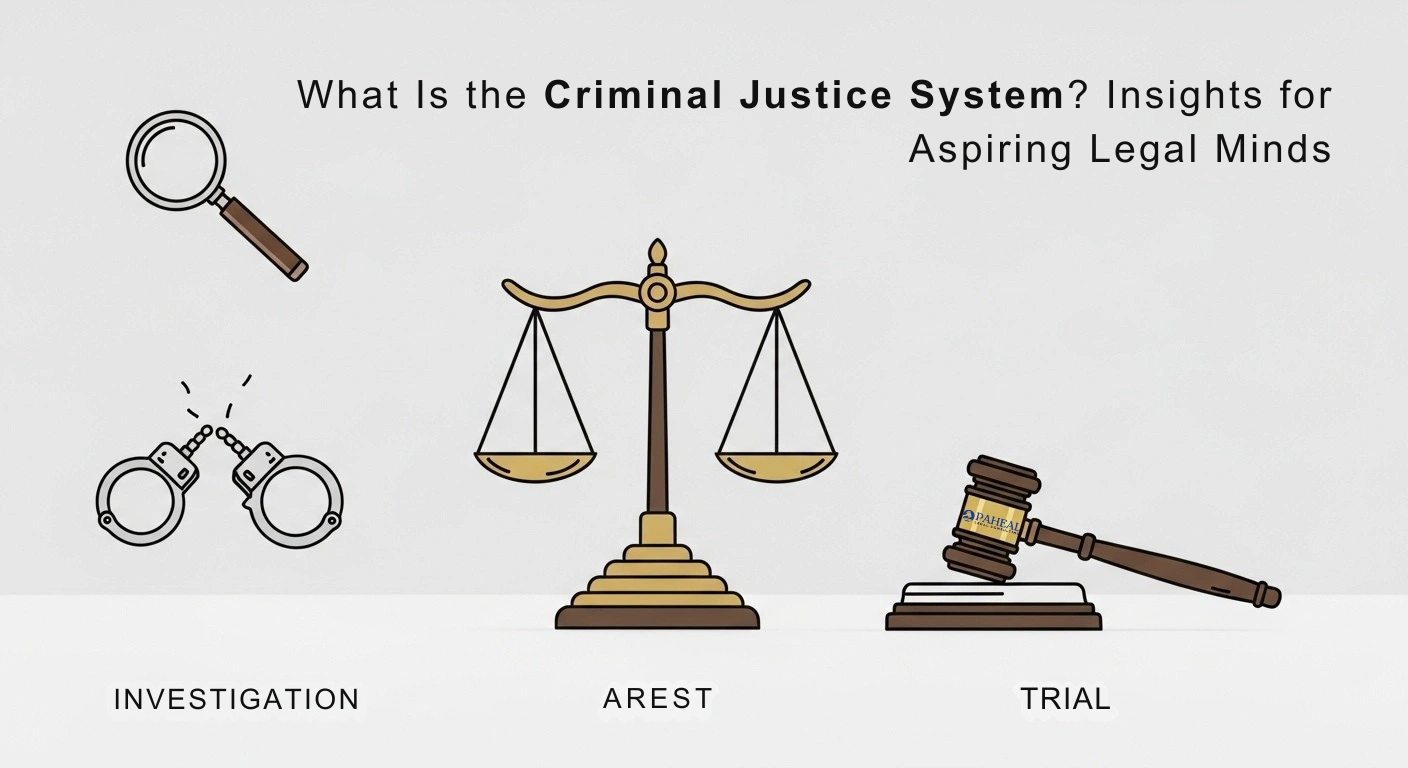
Have you ever wondered what happens after someone commits a crime. Maybe you’ve watched true crime shows and thought about working in the field. You’re not alone. The criminal justice system affects every corner of American life, yet most people only understand bits and pieces of how it works.
If you’re considering a career in law, law enforcement, or corrections, understanding this system is essential. This guide breaks down everything aspiring legal professionals need to know.
What Is the Criminal Justice System
The criminal justice system is America’s organized response to crime. It’s a network of government agencies, institutions, and procedures that work together to:
- Maintain social order
- Deter criminal behavior
- Hold offenders accountable
- Protect innocent citizens
- Rehabilitate offenders
Here’s what many people miss: this system isn’t just about punishment. It serves multiple purposes that often compete with each other.
What makes the American system unique. There isn’t one single criminal justice system. Each state has its own laws, courts, and correctional facilities. This creates 50+ different approaches to justice, all operating under the U.S. Constitution.
The Three Pillars of Criminal Justice
The system rests on three interconnected pillars. Each has distinct responsibilities, but they depend on each other to function properly.
Law Enforcement The First Line of Defense:
Law enforcement is typically the first point of contact between citizens and the justice system. It operates at three levels:
- Local: City police departments handle crimes within municipal boundaries
- State: State police focus on highway safety and support local departments
- Federal: Agencies like FBI, DEA, and ATF tackle crimes crossing state lines
Modern police responsibilities include:
- Responding to emergencies
- Gathering evidence
- Interviewing witnesses
- Writing reports
- Testifying in court
- Community outreach programs
The Court System, Where Justice Gets Served:
Once law enforcement arrests someone, the courts take over. This is where constitutional guarantees come into play.
Key players in the court system:
- Prosecutors: Represent the government and prove the defendant committed the crime
- Defense attorneys: Protect the accused person’s rights
- Judges: Act as referees ensuring both sides follow rules
- Jury: Determines guilt or innocence
- Court clerks: Maintain records and manage case files
- Bailiffs: Provide security and maintain order
American courts operate on a fundamental principle: everyone is presumed innocent until proven guilty beyond a reasonable doubt.
State courts handle most criminal cases from misdemeanors to serious felonies. Federal courts deal with federal laws, constitutional issues, or cases crossing state boundaries.
Corrections Beyond Prison Walls:
The corrections system manages what happens after conviction. It extends far beyond prison walls.
Types of correctional facilities:
- Jails: Hold people awaiting trial or serving sentences under one year
- Prisons: House convicted felons serving longer sentences
- Minimum-security facilities: Relatively open environments
- Maximum-security prisons: Strict controls for dangerous offenders
Community supervision options:
- Probation: Offenders serve sentences in the community under supervision
- Parole: Early release from prison with ongoing monitoring
Modern corrections emphasizes rehabilitation over pure punishment. Programs include:
- Educational courses
- Job training
- Substance abuse treatment
- Mental health services
Research shows rehabilitation programs reduce recidivism the likelihood someone will commit another crime after release.
How a Criminal Case Moves Through the System
Understanding this journey helps aspiring legal professionals see how each component connects.
Investigation and Arrest:
Everything starts when law enforcement learns about a potential crime. Officers:
- Gather evidence
- Interview witnesses
- Identify suspects
- Establish probable cause before making arrests
After arrest, the suspect is booked into jail. Fingerprints and photographs are taken, and the clock starts ticking on constitutional rights.
Prosecution and Pre-Trial:
Prosecutors review evidence and decide whether to file formal charges. Not every arrest leads to prosecution.
Initial court appearances happen within 24-48 hours. The defendant:
- Learns the charges
- Hears their rights
- Gets bail set by the court
Preliminary hearings determine if enough evidence exists to proceed to trial.
Trial and Adjudication:
Most cases never reach trial. Approximately 97% of cases end through plea bargains defendants plead guilty to lesser charges for reduced sentences.
When cases go to trial:
- Prosecution presents evidence first
- Defense cross-examines and presents their case
- Both sides make closing arguments
- Judge instructs the jury on the law news
- Jury deliberates privately
Criminal verdicts must be unanimous all jurors must agree for conviction.
Sentencing and Beyond:
Judges consider multiple factors when sentencing:
- Severity of the crime
- Defendant’s criminal history
- Impact on victims
- Sentencing guidelines
Sentences range from fines and community service to lengthy prison terms.
Criminal Justice Statistics at a Glance
| Category | Current Statistic |
|---|---|
| Total incarcerated population | Over 2 million people |
| Violent crime rate (2024) | 374 per 100,000 residents |
| Change in violent crime (2024 vs 2023) | Down 4.5% |
| Cases ending in plea bargains | Approximately 97% |
| Violent victimization rate (2024) | 23.3 per 1,000 persons |
| Workers with bachelor’s degree | 34.5% |
| Projected career growth | 7-12% (varies by specialty) |
Key takeaway: Crime rates have reached historic lows. The 2024 violent crime rate was the lowest since the 1960s. Yet public perception often differs from reality.
Career Paths in Criminal Justice
The field offers remarkable career diversity based on your interests and education.
Law Enforcement Careers:
Entry-level positions:
- Police officers
- Deputy sheriffs
- Campus security officers
Specialized roles:
- Crime scene investigators
- Intelligence analysts
- Cybercrime specialists
- Federal agents (FBI, DEA, ATF)
Private sector:
- Corporate security
- Loss prevention
- Private investigation
Legal System Careers:
Attorney track (requires law school):
- Criminal prosecutors
- Defense attorneys
- Public defenders
Support roles (no law degree needed):
- Paralegals and legal assistants
- Court administrators
- Court clerks
- Court reporters
Corrections and Rehabilitation Careers:
- Correctional officers: Supervise incarcerated individuals
- Probation officers: Monitor offenders in the community
- Parole officers: Supervise early-release inmates
- Social workers: Address underlying issues leading to crime
- Counselors: Provide mental health and substance abuse treatment
Challenges Facing the Modern System
Racial and Socioeconomic Disparities:
Statistics show people of color and lower-income individuals face different outcomes at every stage:
- Who gets stopped by police
- Who gets arrested and charged
- Who gets convicted
- Who receives harsher sentences
Addressing these inequities requires examining policies and potential biases throughout the system.
Punishment vs. Rehabilitation Debate:
Punishment supporters emphasize:
- Accountability
- Deterrence
- Justice for victims
Rehabilitation advocates point to:
- Research showing treatment reduces recidivism
- Lower long-term costs
- Better community outcomes
Most experts now advocate for evidence-based approaches balancing both.
Mental Health Crisis:
Roughly one in five prisoners suffers from serious mental health conditions. Jails and prisons have become de facto mental health facilities.
Better solutions include:
- Mental health courts
- Diversion programs
- Community-based treatment
Technology and Privacy:
New tools help law enforcement but raise concerns:
- Facial recognition
- Predictive policing algorithms
- Cell phone tracking
- DNA databases
Balancing effective policing with constitutional protections remains challenging.
Getting Started in Criminal Justice
Educational Requirements:
| Career Path | Typical Education |
|---|---|
| Police officer | High school to bachelor’s degree |
| Federal agent | Bachelor’s degree minimum |
| Attorney | Law school (after bachelor’s) |
| Paralegal | Associate or bachelor’s degree |
| Correctional officer | High school diploma |
| Probation officer | Bachelor’s degree |
Gaining Experience:
- Internships with police departments, courts, or correctional facilities
- Volunteer work with victim advocacy or legal aid organizations
- Part-time jobs in security or social services
Building Your Network:
Join professional associations like:
- American Criminal Justice Association
- National Criminal Justice Association
- State-specific criminal justice organizations
Seek mentorship from working professionals most are happy to share experiences with aspiring colleagues.
FAQs
What is the criminal justice system?
A network of government agencies handling crime prevention, law enforcement, courts, and corrections.
What are the 3 main components?
Law enforcement, court system, and corrections.
What is the purpose of criminal justice?
Protect society, deter crime, ensure fair trials, and rehabilitate offenders.
How long to become a police officer?
6-12 months including academy training.
Jail vs prison difference?
Jail is for short sentences (under 1 year). Prison is for longer sentences.
Do I need a law degree?
No. Only attorneys need law degrees. Many jobs require just a bachelor’s or associate degree.
What is recidivism?
When someone commits another crime after release.
Highest paying criminal justice jobs?
Judges, FBI agents, forensic psychologists, and attorneys.
Are crime rates going up or down?
Down. 2024 had the lowest violent crime rate since the 1960s.
What skills do I need?
Critical thinking, communication, problem-solving, and ethical judgment.
Can I work in criminal justice with a criminal record?
Depends on the offense and position. Some jobs allow it, others don’t.
What’s the job outlook?
Growing 7-12% depending on specialty.
Final Thoughts
The criminal justice system stands as one of America’s most important institutions, protecting communities while ensuring everyone receives fair treatment under the law. For aspiring legal minds, this field offers more than just a career it offers a chance to make a real difference in people’s lives every single day. Whether you choose law enforcement, the courts, or corrections, your work will directly impact public safety and justice in your community. Start your journey today by pursuing education, gaining experience, and connecting with professionals who share your passion for justice.